Is Seoul wheelchair friendly? What to expect if you use a wheelchair or can't walk far
In short: yes, with some planning. The subway and the big sights are the easier part. Small restaurants, small shops, and hilly neighborhoods take more care.
Travelers who have done it say much the same. Power wheelchair user Cory Lee wrote in 2025 that wheelchair users can visit Seoul. That trip and its transport were arranged by a travel company, so going on your own will take more planning. Brady Chan, who traveled with a lightweight chair and family help, wrote that Seoul worked with preparation, flexible plans, and patience. [1][2]
What is easy, and what takes planning?
| Part of your trip | What to expect |
|---|---|
| Subway | Usually the best way around. Plan which exit has the elevator |
| Big sights | Many are rated accessible. Check each one for rough ground |
| Buses and wheelchair taxis | Possible, but allow time for waiting |
| Streets | Depends on the area. Hills are the main challenge |
| Hotels | Check the bathroom before you book |
| Restaurants and small shops | Usually the hardest part. Allow for steps at the door |
Can you get around by subway?
Yes. For most visitors, it is the best way around Seoul. In December 2025, Seoul said all 338 stations on its city lines had an elevator route from the street to the platform, with no help needed. That means at least one route per station, not an elevator at every exit. So the main thing to plan is which exit to use. [3]
There are a few exceptions. A July 2026 report said seven stations run by Korail had no elevator route, including Guro and Namyeong. This site's data also lists no street elevator at 11 Seoul Metro stations. That may be a gap in the data, so check the station page and ask staff. [4]
In October 2024 data for Seoul Metro's Lines 1 to 8, about 81% of measured doors had a gap of 10 cm or less between the platform and the train. [5]
Our subway guide covers exits, wheelchair spaces, the gap, and fares.
What about buses and taxis?
Buses. Not every bus has a low floor. Nationwide, 44.4% of city buses did at the end of 2024. Seoul had the shortest interval between low-floor buses in the 2024 survey, at 21.3 minutes. Brady Chan got around mainly by bus, and found that many ramps were folded out by hand. Some trips meant waiting or changing the route. Use the subway first, and keep the bus for places it does not reach. [2][6]
Regular taxis. If you can move from your chair to a car seat, a regular taxi is often the simplest choice for a short trip.
Wheelchair taxis. Seoul Facilities Corporation (서울시설공단) runs 691 accessible call taxis. Its rules include foreign visitors with a disability who use a wheelchair, and a passport or similar ID is checked before the ride. New users must register by phone first, at 1588-4388 (may work only from inside Korea), and waits can be long. The rules page does not say whether English is available. It may not be simple on a short visit, so don't build a whole plan around it. [7][8]
Are the streets easy to get along?
It depends on the neighborhood. Cory Lee found the sidewalks in Myeong-dong well kept in 2025, with many pedestrian-only streets. Brady Chan found the same area crowded, with steps at shop doors. [1][2]
Hills are the main challenge. Cory Lee described Bukchon Hanok Village as hilly. He got up it fairly easily in a power chair, but wrote that a manual wheelchair user would probably need help. [1]

Can you get into the main sights?
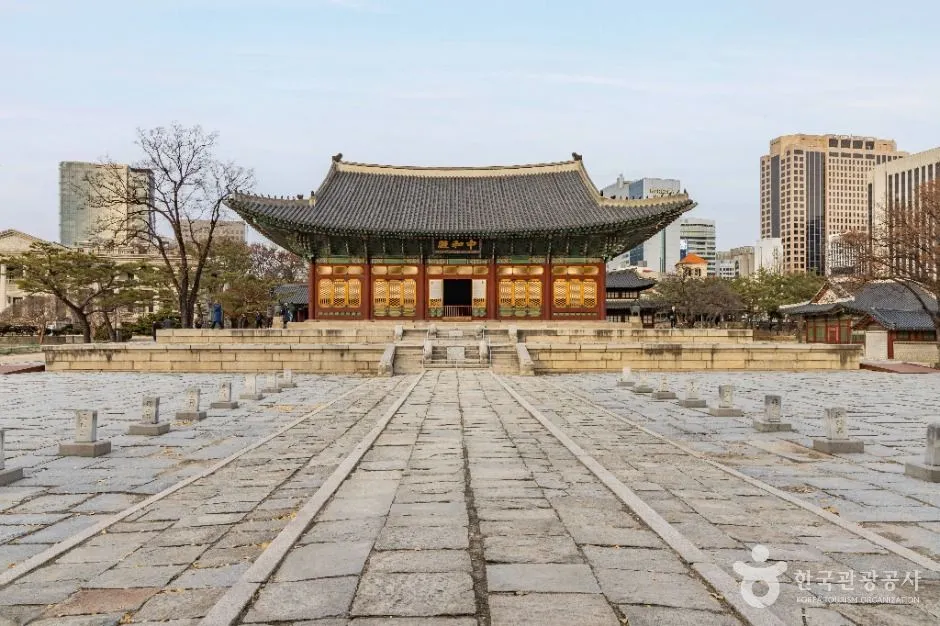
Many of them, yes. Of the 319 places on this site, 171 are rated Wheelchair accessible, 81 Partly accessible, and 67 Not enough data yet.
Among the best known:
- Wheelchair accessible: Deoksugung Palace, Changgyeonggung Palace, the National Museum of Korea, the War Memorial of Korea, N Seoul Tower, and Dongdaemun Design Plaza.
- Partly accessible: Gyeongbokgung Palace, Changdeokgung Palace, Jongmyo Shrine, Bukchon Hanok Village, and Gwangjang Market.
Partly accessible means sources show that only some areas work, or that you may need help. Each place page gives the details we have.
At Gyeongbokgung, Cory Lee found the paths mostly flat and well kept, with ramps, and went around most of the rough stone. He reached N Seoul Tower's observatory by elevator. At Seoul Sky in Lotte World Tower, staff showed the way to an accessible line. [1]
What about restaurants and small shops?
This is usually the hardest part of the trip. Cory Lee sometimes found accessible restaurants hard to find. Brady Chan met small steps and narrow doors at some shops in Insadong. Until 2022, shops under 300 m² did not have to provide a ramp. An April 2022 change lowered that limit to 50 m². In 2022, 3.7% of major convenience stores nationwide had a ramp. [1][2][9]
Some traditional restaurants seat guests on the floor. A raised floor or a shoe rack at the door is a sign to take off your shoes. [10]
A little planning helps:
- Choose your main meals before you go, rather than searching when you are hungry.
- Look for recent photos of the entrance on a map app.
- Keep a mall or hotel restaurant as a backup.
Can you find an accessible hotel room?
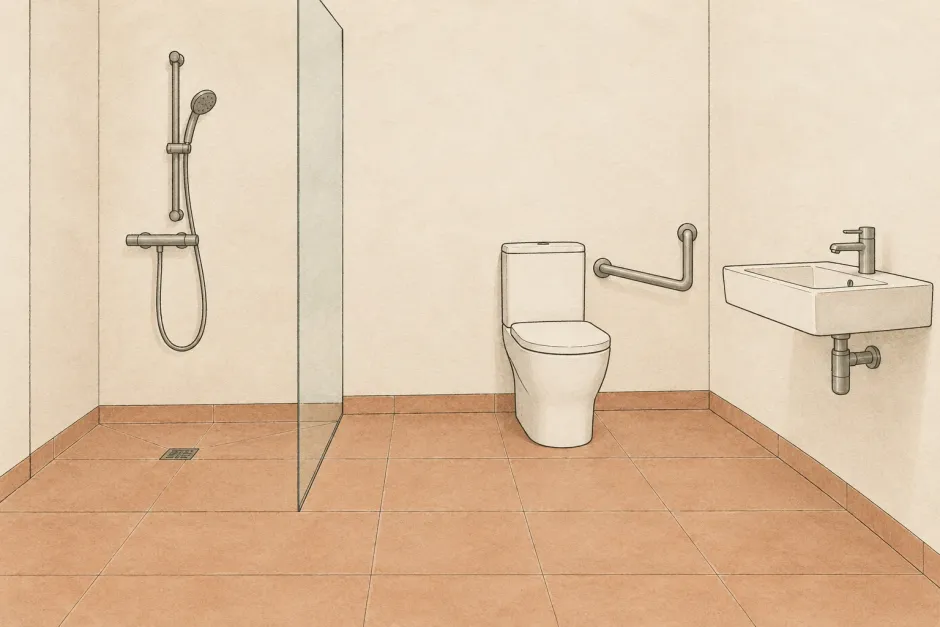
It is possible, but check the details before you book. One traveler's room at a Seoul hotel had a roll-in shower and space under the sink, but no grab bar beside the toilet. So tell the hotel exactly what you need, and ask for photos of the bathroom. [1]
What if walking far is the hard part?
Most of this guide still applies. Here is what changes:
- Save your walking for the sights. Choose subway routes with few transfers.
- Check the Walking load on place pages. Where we have a rating, it tells you how much walking to expect.
- Ask about borrowing a wheelchair. Gyeongbokgung Palace and the National Museum of Korea list a wheelchair rental desk. Lotte Department Store lends wheelchairs for free inside its stores. Ask at the desk what the conditions are, and whether you can take the chair outside. Some places may ask you to leave or show ID, so carry your passport. [11][12][13]
- Plan one big sight a day. Leave time to rest in the afternoon.
Where does this information come from?
The Korea Tourism Organization's accessible travel data service is only in Korean. We bring it together in English and compare it with other public sources. Each place shows its source and date. [14]
Before you go
- Choose your places and check their ratings.
- Look up the elevator exit for each subway stop.
- Tell your hotel what you need, and ask for bathroom photos.
- Choose your main restaurants ahead of time.
- Carry your passport.
Sources
- Cory Lee, "Wheelchair Accessible Seoul, South Korea: Your Ultimate Travel Guide", Curb Free with Cory Lee. https://curbfreewithcorylee.com/2025/07/12/wheelchair-accessible-seoul/. July 12, 2025; checked October 2026.
- Brady Chan, "Rolling Through Seoul in 3 Days: Quick Tips for Wheelchair Travelers". https://adventuremadeaccessible.wordpress.com/2025/05/01/rolling-through-seoul-in-3-days-quick-tips-for-wheelchair-travelers/. May 1, 2025; checked October 2026.
- Seoul Metropolitan Government, press release on elevator routes at all 338 stations. https://www.seoul.go.kr/news/news_report.do?nttNo=449358. December 29, 2025; checked October 2026.
- Kukmin Ilbo Cookie News, report on Korail stations without elevator routes. https://v.daum.net/v/20260727060247110. July 27, 2026; checked November 2026.
- Korea National Railway, Seoul Metro platform gap data (국가철도공단_서울교통공사_승강장이격거리). https://www.data.go.kr/data/15041805/fileData.do. Data dated October 22, 2024; downloaded October 2026.
- Ministry of Land, Infrastructure and Transport, 2024 mobility survey results. https://www.molit.go.kr/viewer/result/20251127/962d540afb8c4825258f9ba35ed05aeb.view.xhtml. November 26, 2025; checked October 2026.
- Seoul Facilities Corporation, accessible call taxi introduction. https://sisul.or.kr/open_content/calltaxi/introduce/intro.jsp. Date not shown; checked October 2026.
- Seoul Facilities Corporation, accessible call taxi rules. https://www.sisul.or.kr/open_content/calltaxi/introduce/receipt.jsp. Date not shown; checked October 2026.
- Money Today, report on convenience store ramps. https://www.mt.co.kr/society/2024/10/22/2024102014103278343. October 22, 2024; checked October 2026.
- LG U+ Korea SIM blog, Korea travel etiquette tips. https://www.lguplus.com/korea-sim/eng/pc/support/blog/korea_travel_etiquette_tip. October 13, 2026; checked October 2026.
- Royal Palaces and Tombs Center, Gyeongbokgung visitor information (경복궁 관람안내). https://royal.khs.go.kr/ROYAL/contents/R701000000.do. Date not shown; checked October 2026.
- National Museum of Korea, floor guide (층별 안내). https://www.museum.go.kr/MUSEUM/contents/M0103070000.do. Date not shown; checked October 2026.
- Lotte Department Store, service information. https://www.lotteshopping.com/serviceInformation/serviceSystem. Date not shown; checked October 2026.
- Korea Tourism Organization, accessible travel information (한국관광공사_무장애 여행 정보). https://www.data.go.kr/data/15101897/openapi.do. February 26, 2026; checked October 2026.
Something wrong or missing here? Tell us what you saw.
Tell usSomething wrong or missing here? Email us what you saw: hello@accessible-korea.com