Waterworks Museum
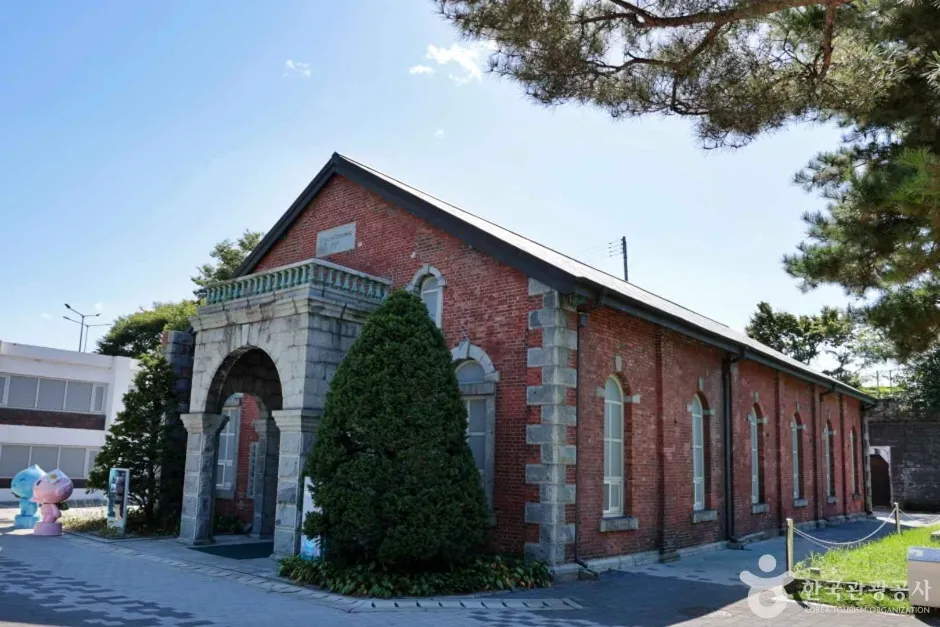
You can visit the Waterworks Museum by wheelchair, with a step-free main entrance, an elevator and an accessible toilet, though some approach ramps are steep. It is a water supply museum built from the facilities of Korea's first water purification plant.
- Wheelchair
- Wheelchair accessibleThe main entrance has no step, wheelchair users can use the elevator, and there is an accessible toilet inside the museum.
- Walking load
- MediumThe guided course links several buildings, with outdoor rest areas and an elevator, but parts of the approach are steep.
- Source
- Checked online · Oct 2026
Getting there
- Seoul Forest StationSuin–Bundang LineStreet elevators at Exits 2 and 3.Exit numbers are approximate.About 470 m in a straight line.Station
- Ttukseom StationLine 2Street elevators at Exits 3 and 6.About 930 m in a straight line.Station
- Ttukseom Station toiletOutside the gates, 2F, by Exit 6. Wheelchair-usable.
Heads-up
The museum is closed every Monday, on January 1, and on the days of Seollal and Chuseok, as of October 2026.
To join the guide service, book at least one week before your visit on Seoul's public service reservation site or by phone at +82-2-3146-5921 (02-3146-5921 inside Korea). You can also ask at the Water and Environment Exhibition Hall information desk.
Getting in
- Approach
- There are no steps on the way to the entrance. Some sections have steep ramps, which can be hard in a wheelchair.
- Entrance
- The main entrance is wide, with no step or slope. It appears to be the Water and Environment Exhibition Hall entrance, and its glass double doors may open by pushing.
- Route
- The museum's directions use Seoul-forest Station Exit 3 on the Suin-Bundang Line. For station elevators, see Getting there. Buses 2224 and 2413 stop about 100 m from the museum (뚝도아리수정수센터 수도박물관 stop).
- Parking
- Free parking inside is only for group vehicles arranged in advance, so individual visitors should use Seoul Forest Park parking or public transit. Seoul Forest Park parking costs 150 won per 5 minutes for small and mid-size cars as of October 2026. Sources differ on whether the museum has an accessible parking space. Call +82-2-3146-5921 (02-3146-5921 inside Korea) to ask.
Inside
- Layout
- The guided course goes from the Water and Environment Exhibition Hall to the Main Building, the Slow Sand Filter and the Annex. The Slow Sand Filter appears to sit lower than the ground around it.
- Elevator
- Museum floors are mostly flat, and wheelchair users can use the elevator freely. The elevator appears to have a low call button and to serve 1F and B1.
- Toilets
- Wheelchair users can use the accessible toilet inside the museum, and it appears to have grab bars on both sides. Parts of it can be inconvenient to use.
- Rest
- The outdoor rest areas have wooden tables with parasols, a raised wooden shelter and a deck by the drinking fountain. You can eat a packed lunch there.
- Rentals
- Borrow a wheelchair or stroller at the information desk at the Water and Environment Exhibition Hall entrance. Lockers at the same entrance can hold heavy bags.
Also useful
- Hours, fee
- Open Tuesday to Sunday, 09:00–18:00, as of October 2026. General exhibitions are free as of October 2026, and there is no ticket desk.
- Guide service
- A free guide service of about 40 minutes is available as of October 2026. Add time for hands-on activities and photos.
- Vision
- The main entrance has tactile paving, and guide dogs may enter. A QR audio guide works on your smartphone, but signs and the information desk have no braille.
- Hearing
- Sign language exhibition videos play on your smartphone by QR code. Signs and the information desk have no sign language information.
Not known yet
- Where the steep ramps are, how long they are, and whether you can avoid them
- How much of the Main Building, Slow Sand Filter and Annex you can see by wheelchair, and the surface, slope and distance between them
- Which building and floor the accessible toilet is on, and which parts are inconvenient
- Whether Seoul-forest Station Exit 3 has an elevator, and whether the sidewalk to the museum has curbs, slopes or crossings
- Whether the guide service, QR audio guide and sign language videos are available in English
Sources
The summary, the notes and the lists on this page draw on these sources.
- Korea Tourism OrganizationAug 2025
- Seoul Water
- Seoul DanurimOct 2026
Something wrong or missing here? Tell us what you saw.
Tell usSomething wrong or missing here? Email us what you saw: hello@accessible-korea.com