Seoul Museum of History
Yes, wheelchair users can visit: the main entrance has no step, the building has an elevator, and the 1st floor has an accessible toilet. Seoul Museum of History (서울역사박물관) is a hands-on museum about Seoul's history and culture from prehistoric times to today.
- Wheelchair
- Wheelchair accessibleThe main entrance has no step, an elevator serves the building, and the 1st floor has an accessible toilet.
- Walking load
- Not rated yet
- Source
- Checked online · Oct 2026
Getting there
- Seodaemun StationLine 5Street elevators at Exits 2 and 6.About 580 m in a straight line.Station
- Seodaemun Station toiletOutside the gates, B1, by Exits 1 and 2. Wheelchair-usable.
- Gwanghwamun StationLine 5Street elevator at Exit 1.About 600 m in a straight line.Station
- Gwanghwamun Station toiletOutside the gates, B1, by Exits 7 and 8. Wheelchair-usable.
Heads-up
The museum closes every Monday and on January 1. If a Monday is a public holiday, it stays open.
Getting in
- Entrance
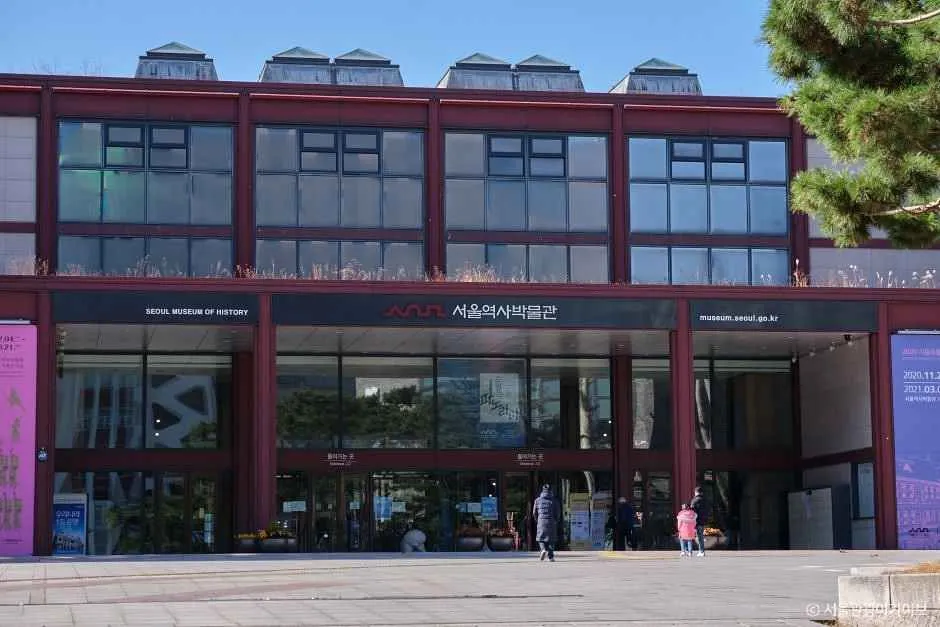
- You can reach the main entrance by wheelchair: it is wide and has no step. The doors appear to be sliding glass doors.
- Approach
- The path to the entrance is wide with no steps, and it may have a ramp or be level.
- Parking
- Accessible spaces number 3 or 6, with 2 of the 6 beside the main entrance. Sources differ on the number of accessible spaces. Call 02-724-0234 (+82-2-724-0234) to ask about parking. English support by phone is not known. For vehicles with a capacity of 20 people or fewer, parking costs 1,000 won for the first hour and 400 won for each extra 5 minutes. The prepaid daily rate is 22,000 won, as of October 2026.
- Route
- For walkers, the museum suggests Gwanghwamun Station Exit 7 and Seodaemun Station Exit 4. These exits have no street elevator; see Getting there. Bus stops 01007, 01008, 01123 and 01250 are in front of the museum.
Inside
- Exhibition
- The permanent exhibition is on the 3rd floor, with four zones and a city model hall around the stairs. Older information gives about 1 hour 30 minutes to 2 hours to see it.
- Elevators
- The elevator has voice announcements, but it is a bit narrow inside and may feel tight in a wheelchair. Older visitors and people with disabilities should use the one to the left of the main door, in front of the toilets. Elevators appear to reach the 3rd floor, though the layout there may have changed since 2022.
- Toilets
- The 1st floor has an accessible toilet. Other floors may have one too. Sources differ on whether other floors have one. Call the information desk at 02-724-0274 (+82-2-724-0274) to ask. These toilets are called family helper toilets (가족도우미화장실), and men and women share them, which may feel uncomfortable.
- Rest stops
- The 3rd floor has a rest area for breaks during the permanent exhibition. The 1st-floor cafe behind the central stairs opens 09:00–18:00 and closes on Mondays, as of October 2026. In practice, on evenings when the museum stays open until 21:00, the 3rd-floor rest area may be about the only place to rest.
- Wheelchairs
- You can borrow one of 12 wheelchairs at the information desk, and older visitors can use them too. A charger for power wheelchairs is also available.
Also useful
- Hours
- The museum opens 09:00–18:00, Tuesday to Sunday, as of October 2024. Hours from December 2026 are not known. Sources differ on closing times through November 30, 2026: 21:00 except Thursdays at 18:00, or 18:00 except Fridays at 22:00. Call the information desk at 02-724-0274 (+82-2-724-0274) to ask.
- Admission
- Individual admission is free, including for foreign visitors, as of October 2026.
- English help
- Borrow a free English audio guide for the 3rd-floor exhibition at the 1st-floor information desk by leaving an ID and filling in a form, as of October 2026. You can also scan the QR codes on 3rd-floor labels with your own phone. For an English guide service, email river2ocean@seoul.go.kr.
- Vision, hearing
- The museum has braille and audio maps, plus tactile paving on the path and at the main entrance. The information desk lends a text caption device to visitors with hearing loss. You can touch replica artifacts at the Touch Museum Corner, and guide dogs can enter.
Not known yet
- Whether the way from the elevator exits to the museum has curbs, slopes or difficult crossings
- The elevator's inside size, and whether a power wheelchair and a companion fit together
- Whether the main entrance doors open automatically
- The wheelchair loan fee and booking rules, and whether a passport works as ID
- The walking distance through the exhibitions, and how many seats the galleries have
Sources
The summary, the notes and the lists on this page draw on these sources.
- Seoul Museum of HistoryFeb 2014
- Korea Tourism Organization and Seoul MetroOct 2026
- Korea Tourism OrganizationOct 2026
- Seoul DanurimOct 2024
Something wrong or missing here? Tell us what you saw.
Tell usSomething wrong or missing here? Email us what you saw: hello@accessible-korea.com