Seoul Baekje Museum
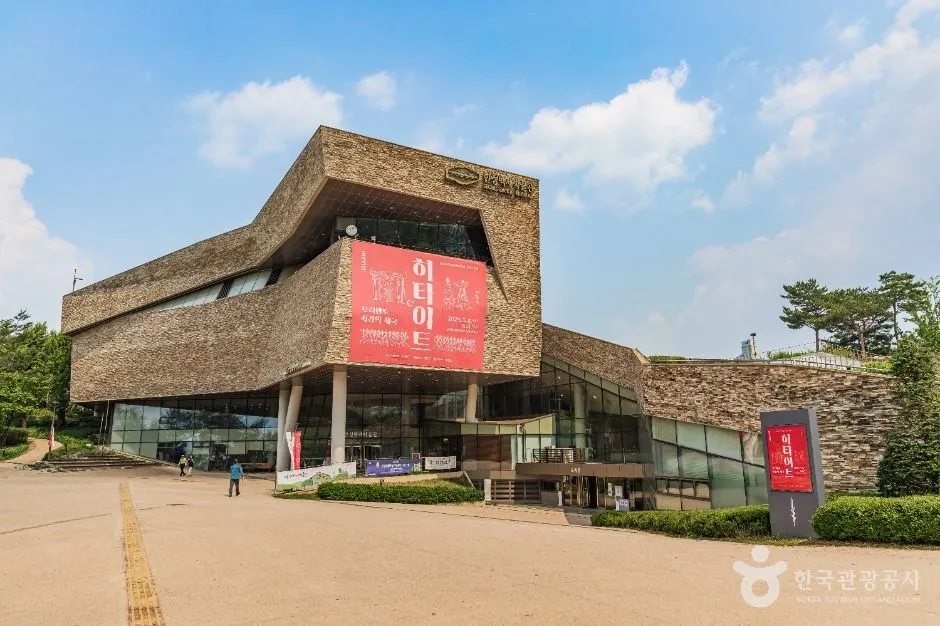
Wheelchair users can visit: the main entrance has no steps, and there is an elevator and an accessible toilet. This museum in Olympic Park covers Seoul's history as Hanseong, the Baekje capital. Access to the floor 1 permanent exhibition is limited from September to December 2026.
- Wheelchair
- Wheelchair accessibleYou can enter without steps, use the elevator inside, and use an accessible toilet.
- Walking load
- Not rated yet
- Source
- Checked online · Oct 2026
Getting there
Heads-up
The floor 1 permanent exhibition has limited access during gallery work from September to December 2026. It is due to reopen in December. Call the museum to ask what is open on your date.
The museum is closed on Mondays, January 1, and other days set by the mayor. If Monday is a public holiday, it opens as usual. This is as of October 2026.
Guide service is paused while the permanent exhibition is redone, as of October 2026. A new service is being prepared for January 2027 or later. Sources differ on whether you can book a guide now. Call 02-2152-5800 (+82-2-2152-5800) to ask.
Getting in
- Entrance
- You can reach the main entrance on basement floor B1 by wheelchair, with no steps. The approach is wide, with a flat or gentle slope.
- Doors
- The entrance doors open by hand, not automatically. The doors appear to be glass swing doors with long handles, with no visible raised sill.
- Parking
- Accessible parking is on B2 and B3, but the lot gets crowded, so use public transport if you can. For vehicles under 20 seats, the first 30 minutes are free, then 300 won per 5 minutes, up to 20,000 won a day, as of October 2026. People with disabilities and national merit recipients may get 80% off, but the rules and whether foreign visitors qualify are not known. Ask the museum whether this covers you.
- Route
- The museum's directions from Hanseong Baekje use Exit 2, about 5 to 6 minutes on foot, and this exit has an elevator. Its directions from Mongchontoseong use Exit 1, about 10 to 15 minutes on foot. This is not the station's elevator exit, so your route from the elevator may differ.
Inside
- Elevator
- The museum has an accessible elevator. Using it may be awkward in some cases, and the reason is not known. A wheelchair lift may also be beside a staircase, but its location is not known.
- Floors
- By elevator or stairs, you can go from the B1 lobby to Gallery 2 on floor 1, and to the restaurant and rooftop Sky Garden on floor 2. The floors inside are flat, and there is an indoor ramp.
- Toilets
- An accessible toilet is available, with enough room inside and an emergency bell. It appears to have fold-down grab bars. Ask at the information desk which floor it is on.
- Rest
- You can buy a drink and rest at the Museum Cafe on B1. Floor 2 has an Italian restaurant. You cannot bring food or drink into the museum.
- Wheelchairs
- Older visitors and people with disabilities can borrow a wheelchair for free at the information desk. Use it inside the building only.
Also useful
- Hours
- The museum usually opens 9:00 to 19:00, and until 21:00 on Fridays. From November to February, weekends close at 18:00. These hours are as of October 2026. Sources differ on whether the regular closing time is 18:00 or 19:00. Call 02-2152-5800 (+82-2-2152-5800) to ask.
- Admission
- Permanent exhibitions are free as of October 2026. Special exhibitions may charge a fee, so call 02-2152-5800 (+82-2-2152-5800) to ask. A special exhibition on the Samguk Sagi and Samguk Yusa runs from November 27, 2026 to February 21, 2027 in the basement special galleries.
- Phone guide
- Scan the QR codes in the galleries to see exhibit guides on your own phone, including in English. Bring your own earphones, because the museum does not lend them. New content will come after the permanent exhibition update.
- Vision, hearing
- The museum has Braille signs, and the approach has tactile paving. Guide dogs are allowed. There are no dedicated facilities for Deaf or hard-of-hearing visitors.
Not known yet
- Which floor the accessible toilet is on
- Why the elevator can be awkward, and whether any part of the visit needs the lift
- Slopes, surfaces and road crossings between the station elevator and the entrance
- How long the route through the galleries is
- How many wheelchairs you can borrow, and whether you need a passport
Sources
The summary, the notes and the lists on this page draw on these sources.
- Korea Tourism OrganizationAug 2025
- Hanseong Baekje MuseumOct 2026
- Seoul DanurimDec 2024
Something wrong or missing here? Tell us what you saw.
Tell usSomething wrong or missing here? Email us what you saw: hello@accessible-korea.com