Seongsu-dong Cafe Street
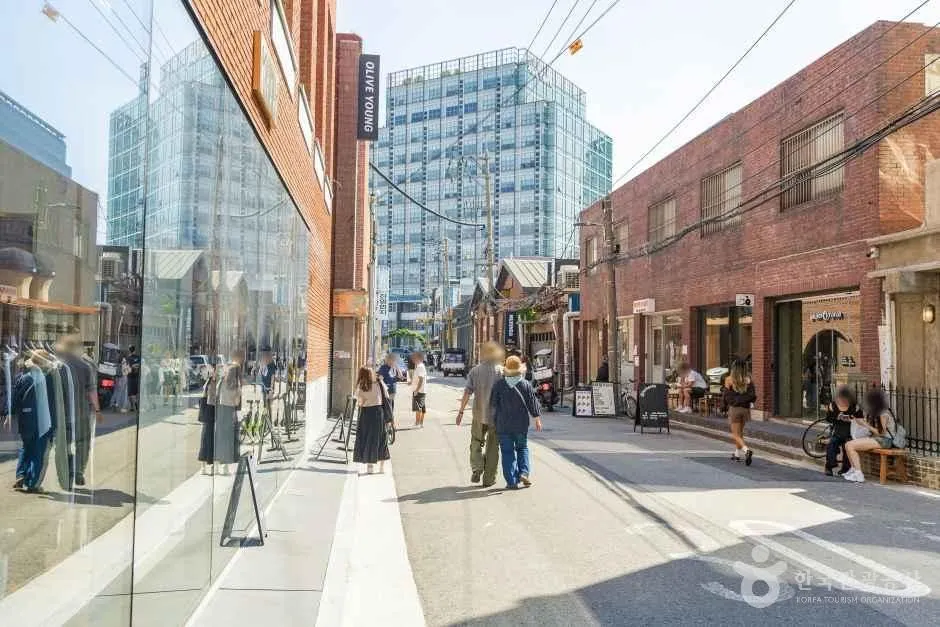
You can reach this street by wheelchair: the approach and main way in have no step. Parts of Seongsu-dong that were once factories, such as Yeonmujang-gil (연무장길), now have many cafes and cultural spaces.
- Wheelchair
- Wheelchair accessibleThe approach and main way in have no step, and Yeonmujang-gil is about 10 m wide.
- Walking load
- Not rated yet
- Source
- Checked online · Oct 2026
Heads-up
On weekend afternoons, Yeonmujang-gil can fill with people, as of January 2026. Pop-up events can also bring heavy crowds. If you need room to move, plan your visit outside weekend afternoons.
Getting in
- Way in
- The approach and main way in have no step, so you can enter by wheelchair.
- Parking
- The street has no parking of its own. Use the public parking lot at Seongsu Station. The location and number of accessible spaces are not known.
Inside
- Paths
- Yeonmujang-gil has no separate sidewalk, as of January 2026. Walkers, waiting lines, and cars share one road about 10 m wide.
- Road plan
- Seongdong District (성동구) planned to make this stretch of the street a pedestrian-only road in April 2026. Whether this happened is not known, so be ready to share the road with cars.
Also useful
- Hours
- As of October 2026, the street is open 24 hours a day, all year. Each shop sets its own hours and closed days.
- Contact
- Call the Seongsu Tourist Information Center (성수관광안내소) at 02-466-2286 (+82-2-466-2286). For district tourism questions, call Seongdong District at +82-2-2286-5114. Whether staff speak English is not known.
Not known yet
- Road surface, slopes, and any stretches a wheelchair cannot pass
- The step-free route and distance from the station elevators to the street
- Accessible toilets and places to rest on or right beside the street
- Which spot counts as the main way in, and curb ramps at other entry points
- Steps, doors, seating, and toilets at individual cafes
Sources
The summary, the notes and the lists on this page draw on these sources.
- Korea Tourism OrganizationAug 2026
- Money TodayJan 2026
- Herald BusinessMar 2026
Something wrong or missing here? Tell us what you saw.
Tell usSomething wrong or missing here? Email us what you saw: hello@accessible-korea.com